CastNet Blog

TSCM 101 Series

The Real-World Threats Organizations Face

The Real-World Threats Organizations Face

Introduction

Most people think surveillance only happens in spy movies.
But in reality, the most common surveillance threats happen in normal workplaces, meeting rooms, offices, boardrooms, and vehicles.

And they aren’t theoretical.

They’re happening every day.

If your organization discusses strategy, money, intellectual property, emerging product designs, mergers, legal cases, or negotiations, someone could benefit from hearing those conversations.

That’s why Technical Surveillance Countermeasures (TSCM) exist.

Let’s break down the 4 real-world threat categories we encounter most often during professional sweeps:

🔊 1. Hidden Audio Devices

Small microphones are now:

  • Cheaper

  • Smaller

  • Easier to hide

  • And easier to buy than ever before

We find audio devices:

  • Inside office chairs

  • Inside light fixtures

  • In pens and USB chargers

  • Hidden behind drywall

Some record and store audio.
Some transmit live in real time.

These devices are intentionally designed to blend in.

This is why “looking around the room” is not a security strategy.

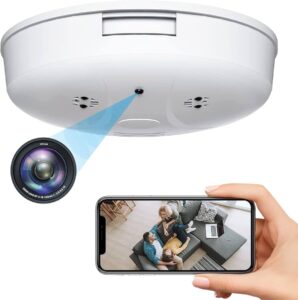
📹 2. Covert Video Surveillance

Micro-cameras today are:

  • Capable of HD resolution

  • And often indistinguishable from everyday objects

Common disguises we encounter:

  • Smoke detectors

  • Screw heads

  • Wi-Fi extenders

  • Power bricks

  • Wall or desk décor

What gets recorded isn’t always “conversation.”
Often, it’s:

  • Whiteboard notes

  • Laptop screens

  • Badge access

  • Meeting schedules

In other words: the context behind your decisions.

📡 3. Wireless & Network-Based Devices

Not all devices record.
Some devices transmit.

This is where threats become harder to detect without specialized equipment.

We regularly detect:

  • Bluetooth transmitters

  • Wi-Fi transmitters

  • Cellular-connected devices

  • GPS trackers on vehicles

These devices hide inside your network noise.

To the untrained eye, it looks like “just another Wi-Fi signal.”

To us, it’s a red flag.

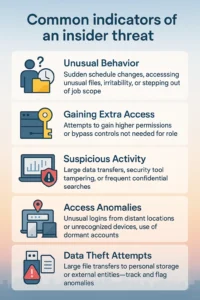
🧍‍♂️ 4. Insider-Enabled Compromise

This is the hardest to talk about — because it doesn’t require a hacker.

It requires access.

Insiders (employees, contractors, vendors, cleaning crews, maintenance staff) may:

  • Leak information intentionally

  • Be bribed

  • Be socially engineered

  • Or simply be unaware they are enabling access

This is why trust is not a security protocol.
Verification is.

So what’s the risk?

Surveillance is almost never random.
It is purpose-driven and usually financially motivated.

Real-world consequences include:

  • Lost contracts

  • Lost patent opportunities

  • Compromised negotiations

  • Lawsuits

  • Erosion of reputation and trust

These are risks that most businesses never recover from.

This is why TSCM is not just “finding bugs.”

                     It is:

  • Adversarial thinking

  • Forensic inspection

  • RF data analysis

  • Facility vulnerability assessment

  • Policy hardening

  • Insider risk evaluation

The tools matter.
But the operator matters more.

At CastNet, we’ve been on the other side of surveillance.
As former FBI Technically Trained Agents, we didn’t just learn how to detect devices —
we installed them for federal investigations.

Which means:
We know the methods.
We know the hiding places.
We know the behavior patterns.

And we know how to stop them.

If your business handles sensitive information…

This isn’t paranoia.
This is modern security.

👉 Send a message
👉 Ask a question
👉 Or request a confidential consultation

 

No pressure. No sales pitch.
Just clarity.